
Static Apnea Training Guide: Understanding STA Safely
Static apnea (STA) is one of the most recognised disciplines in freediving. It involves holding your breath while remaining still, usually floating face down in the water or resting comfortably on the surface.
Many people discover static apnea through freediving courses and are often surprised by how much performance can improve through relaxation, breathing awareness and proper technique.
However, static apnea should always be approached with safety as the number one priority. This guide is designed to help you understand what static apnea is and why it is used in freediving training, but it is not intended as a self-training programme.
What Is Static Apnea?
Static apnea is the discipline of holding your breath while remaining motionless.
Unlike dynamic apnea, where a freediver swims underwater, static apnea focuses on relaxation and efficiency. Because the body remains still, oxygen consumption is reduced, making it possible to hold the breath for longer periods.
In freediving education, STA is often used to help students understand breath-hold physiology, relaxation techniques and mental control.
Why Do Freedivers Practice Static Apnea?
Static apnea is commonly used during freediving training because it allows students to focus entirely on breath-hold awareness without the additional demands of movement.
Benefits may include:
- Improved body awareness.
- Better relaxation skills.
- Increased confidence during breath-hold activities.
- Understanding the body’s natural responses to elevated CO₂ levels.
Static apnea is not about competing against others. It is primarily a tool for learning and developing comfort during breath-hold situations.
Understanding the Urge to Breathe
One of the most important lessons in static apnea is learning to recognise the body’s signals.
As carbon dioxide levels increase, most people begin to feel the urge to breathe. This is a normal physiological response and does not necessarily mean oxygen levels are low.
Understanding these sensations under proper supervision can help students remain calm and make better decisions during freediving activities.
For a deeper understanding of carbon dioxide adaptation, see our article on CO₂ Tables for Freediving: How They Work.
The Importance of Relaxation
Relaxation is one of the key factors affecting breath-hold performance.
Muscle tension, stress and anxiety increase oxygen consumption. By learning how to relax both physically and mentally, many students discover that they can significantly improve their comfort during static apnea.
This is one reason why breathwork techniques are often incorporated into freediving training.
You may also be interested in our guide on How to Hold Your Breath Longer for Freediving.
Static Apnea and Freediving Safety
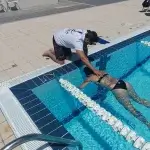
Safety must always come first.
Static apnea should never be practised alone.
Even experienced freedivers train with qualified buddies, instructors or safety divers who understand proper rescue procedures and supervision protocols.
Loss of motor control and shallow water blackout can occur without warning, making direct supervision essential at all times.
No breath-hold training objective is more important than safety.
Can Beginners Practice Static Apnea?
Yes, beginners can be introduced to static apnea as part of a structured freediving programme.
However, this should be done under the supervision of a qualified instructor who can provide guidance, monitor safety and teach correct procedures.
Participants should also be in normal physical condition and comfortable in the water before taking part in breath-hold activities.
If you are completely new to freediving, we recommend starting with a supervised introduction such as our Try Freediving Experience or a certified PADI Freediver Course.
How Static Apnea Fits Into Freediving Training
Static apnea is only one component of freediving education.
A complete training programme also includes:
- Breathing techniques.
- Equalisation skills.
- Dynamic apnea.
- Open water freediving.
- Safety procedures.
- Ocean awareness.
Combining all these elements helps create safer and more confident freedivers.
You can also read our articles on Equalisation for Beginners and Is Freediving Safe for Beginners? for additional information.
Interested in Learning More?
If you would like to experience static apnea as part of a structured and supervised programme, Apnea Fuerteventura offers freediving courses, breathwork sessions and beginner-friendly experiences in South Fuerteventura.
Whether you are completely new to breath-hold training or looking to improve your water confidence, our programmes focus on safety, education and personal progression.

